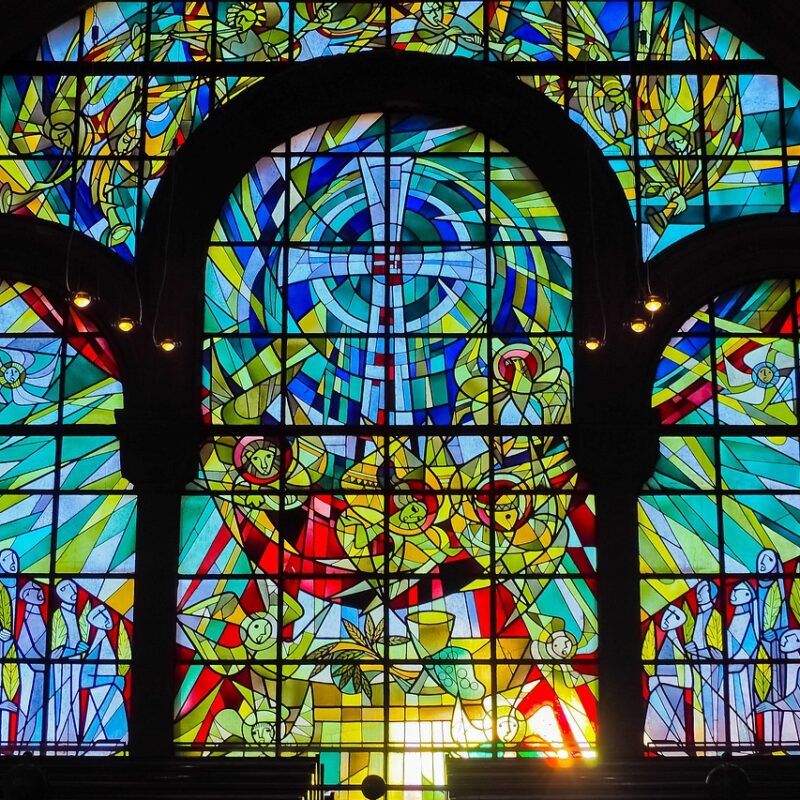
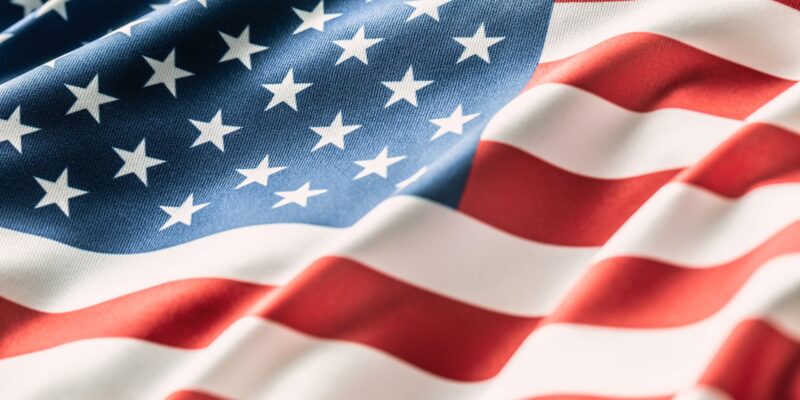
Walk into some church sanctuaries in the United States and you will see the cross, the altar, the font, and a national flag sharing the same field of vision. Around Independence Day or Memorial Day, the congregation may also sing a patriotic song during worship. These practices can feel familiar, grateful, and harmless. They still teach a theology.
Worship forms our loves and trains our loyalties. When the symbols and songs of one nation enter the space where the church proclaims Jesus as Lord, they give that nation sacred weight. The message may be unintended, yet the sanctuary begins to suggest that Christianity and American identity belong together.
That suggestion feeds Christian nationalism. The church must reject it clearly. Christian nationalism distorts the Gospel, turns worship toward national self-glorification, and gives one country a place beside the reign of God. No nation belongs at the altar.
What Christian nationalism is
Christian nationalism is a political and cultural ideology that fuses a preferred Christian identity with national identity. In the United States, it claims that America is essentially Christian, that “real” American identity carries Christian cultural marks, and that government should preserve or restore Christianity’s privileged position. The Episcopal Church’s House of Bishops Theology Committee describes this ideology as a fusion of American civic life with a particular form of Christian culture, often entangled with whiteness, nativism, patriarchy, and militarism.1House of Bishops Theology Committee. (2023, March). Christian nationalism: An interim report to the House of Bishops from the Theology Committee. The Episcopal Church. https://static1.squarespace.com/static/5ade38cf7e3c3a8e0fd03b28/t/640f198c15884a1f72578e3a/1678711181823/2023-03%2BHoB%2BTheology%2BCommittee%2Binterim%2Breport-final.pdf
Christians may bring their faith into public life. We should vote, advocate, organize, serve, protest injustice, and hold leaders accountable. Christian nationalism takes a different path. It seeks privilege and control. It treats the nation as specially chosen by God and uses Christian language to justify who should possess power, whose history should define the country, and whose lives may be pushed to the margins.
The House of Bishops committee calls Christian nationalism sinful and places it in conflict with the first two commandments. That judgment is theologically sound. When the nation acquires sacred status, it becomes an idol. When the cross becomes a tool for enforcing national power, the image of God is recruited to serve that idol.
It reverses the way of Jesus
Jesus consistently refuses the power Christian nationalism wants. He tells his disciples that rulers dominate others and then commands, “it is not so among you” (Mark 10:43, NRSVue). His community will measure greatness through service. Before Pilate, Jesus says that his kingdom does not arise from the world’s systems of power. In Luke’s Gospel, his first sermon reminds his hometown that God’s mercy reached a widow in Sidon and a Syrian military officer. Their anger erupts when Jesus refuses to make divine grace the possession of his own people.2National Council of Churches. (2021). New Revised Standard Version Updated Edition (Mark 10:42–45; Luke 4:16–30; John 18:36; Acts 2:5–11; Philippians 3:20; Revelation 7:9).
Christian nationalism reverses this pattern. Jesus gives himself in love; nationalism reaches for domination. Jesus crosses boundaries; nationalism decides whose identity belongs at the center. Jesus exposes the violence of empire; nationalism asks the church to bless the empire’s story about itself.
The Gospel does have public consequences. It calls us to protect immigrants, confront racism, defend LGBTQ people, care for those living in poverty, and respect the dignity of every human being. Those commitments grow from allegiance to Jesus. They also give the church enough distance from every political party and government to speak the truth when national conduct violates love of neighbor.
Flags and patriotic hymns form us
A flag near the altar does more than decorate a room. It places the nation inside the visual grammar of worship. The cross announces self-giving love. The font announces a new identity in Christ. The altar gathers one body from many peoples. A national flag represents a political community with borders, armed power, laws, interests, achievements, and sins. Giving these symbols shared sacred space blurs loyalties that the church needs to keep clear.
Music can produce the same confusion. The Hymnal 1982 includes a group of “National Songs,” including “My Country, ’Tis of Thee,” “God of Our Fathers,” “America the Beautiful,” and “The Star-Spangled Banner.”3Church Hymnal Corporation. (1985). The Hymnal 1982: According to the use of the Episcopal Church (Hymns 716–720). https://hymnary.org/hymnal/EH1982 Their presence in an authorized hymnal does not make every liturgical use wise. When a congregation sings praise directed toward America during Christian worship, national affection receives the emotional power of hymnody, organ, procession, and gathered prayer. Repetition makes the association between God and country feel natural.
The Episcopal Church has begun confronting that symbolic confusion. In 2025, Missouri Bishop Deon Johnson directed clergy and congregations to move U.S. flags outside the altar area and place them near rolls of honor, books of remembrance, or service memorials. His guidance honors veterans while preserving the church’s first allegiance to God.4Johnson, D. K. (2025, March 10). The crisis of Christian nationalism: A pastoral letter from the bishop. Episcopal Diocese of Missouri. https://diocesemo.org/application/files/4017/4164/1307/2025_Christian_Nationalism_Pastoral_Letter_FINAL.pdf Later that year, Spokane Bishop Gretchen Rehberg urged congregations to consider moving national flags out of worship spaces, while clearly stating that she was not issuing a diocesan directive.5Rehberg, G. M. (2025, July 4). Faithful patriotism recognizes the sanctuary is for God alone. FāVS News. https://favs.news/faithful-patriotism-sanctuary-god-alone/
While Bishop Johnson directed flag placement in Missouri, Bishop Rehberg offered strong pastoral urging in Spokane. Both grounded their arguments in the same confession: the sanctuary belongs to the worship of God.
What the Flag Code actually says
The U.S. Flag Code does not prohibit a flag inside a church, but its instructions reveal why the sanctuary is the wrong place for one. When displayed from a staff in a church, the flag is to hold “the position of superior prominence” and “the position of honor” at the clergyperson’s right. No other flag or pennant should be placed above it or, at the same level, to its right. The Code makes one narrow exception: during church services conducted by naval chaplains at sea, a church pennant may fly above the U.S. flag. It also says that the flag should never be dipped “to any person or thing.”6Office of the Law Revision Counsel. (n.d.). 4 U.S.C. § 7: Position and manner of display. U.S. House of Representatives. Retrieved July 27, 2026, from https://uscode.house.gov/view.xhtml?edition=prelim&num=0&req=granuleid%3AUSC-prelim-title4-section7; Office of the Law Revision Counsel. (n.d.). 4 U.S.C. § 8: Respect for flag. U.S. House of Representatives. Retrieved July 27, 2026, from https://uscode.house.gov/view.xhtml?edition=prelim&num=0&req=%28title%3A4+section%3A8+edition%3Aprelim%29
Those rules protect the flag’s dignity by assigning it precedence. That same precedence creates a theological problem in a sanctuary. Christian worship cannot give any nation “superior prominence” or a “position of honor” within the space where the church proclaims Jesus as Lord. The cross, font, and altar announce an allegiance that crosses every national border. A national flag can be honored in a parish hall, memorial space, or another appropriate place. Moving it out of the sanctuary respects both the flag’s civic meaning and the church’s confession that worship belongs to God alone.
The myth of a Christian founding
Christian nationalism depends on a selective national memory. The United States has always contained deep Christian influence, many devout Christian citizens, and serious religious arguments in public life. Those facts do not make the federal government a Christian institution.
The 1797 Treaty of Tripoli offers striking evidence. Article 11 of the English text ratified unanimously by the Senate declares that the U.S. government “is not, in any sense, founded on the Christian religion.” A textual complication deserves honesty: the corresponding Arabic document contains no equivalent Article 11. Yet the English version containing that sentence was the text submitted to the Senate, ratified, proclaimed, and printed in official U.S. treaty collections.7United States. (1797). Treaty of peace and friendship between the United States of America and the Bey and subjects of Tripoli of Barbary, art. 11. The Avalon Project, Yale Law School. https://avalon.law.yale.edu/18th_century/bar1796t.asp; Miller, H. (Ed.). (1931). Treaties and other international acts of the United States of America: Treaty with Tripoli, 1796, notes. U.S. Government Printing Office. https://avalon.law.yale.edu/18th_century/bar1796n.asp
The treaty cannot summarize every founder’s personal theology. It does establish that the early federal government could formally describe itself as lacking a Christian foundation. Claims that America’s civil government was created as an explicitly Christian state cannot absorb that evidence without distorting the record.
Much of the religious language now treated as ancient American tradition arrived during the Cold War. Congress added “under God” to the Pledge of Allegiance in 1954. President Dwight Eisenhower’s signing statement framed the change against a global “materialistic philosophy” and atomic conflict, language aimed at atheistic communism.8Eisenhower, D. D. (1954, June 14). Statement by the President upon signing bill to include the words “under God” in the Pledge to the Flag. The American Presidency Project. https://www.presidency.ucsb.edu/documents/statement-the-president-upon-signing-bill-include-the-words-under-god-the-pledge-the-flag Congress required “In God We Trust” on all currency in 1955 and designated it the national motto in 1956. The phrase had appeared on some coins since the Civil War, but its expansion and elevation in the 1950s belonged directly to Cold War efforts to distinguish the United States from communism.9Office of the Historian, U.S. House of Representatives. (n.d.). The legislation placing “In God We Trust” on national currency. Retrieved July 27, 2026, from https://history.house.gov/HistoricalHighlight/Detail/36275; Office of the Law Revision Counsel. (n.d.). 36 U.S.C. § 302: National motto. U.S. House of Representatives. Retrieved July 27, 2026, from https://uscode.house.gov/view.xhtml?req=%28title%3A36+section%3A302+edition%3Aprelim%29
These additions did more than express private faith. They constructed a public contrast between a supposedly godly America and a godless enemy. That is civil religion at work: religious language used to give national identity sacred meaning.
Pentecost gives us a stew
I prefer to think of the United States as a stew rather than a melting pot. A melting pot suggests that everything has been combined until its origins disappear. In a stew, the carrot remains a carrot, the pea remains a pea, and the potato remains a potato. They share the same pot. They affect one another, soften one another’s edges, and create something together without losing every distinction.
Pentecost looks more like that stew. The Holy Spirit does not erase the languages of the gathered peoples. She enables each person to hear the good news in their own language. Revelation carries that vision to its fulfillment: a multitude from every nation, tribe, people, and language worships before God. Their diversity remains visible in the worship of the one who gathers them.
America’s diversity is a gift and a source of strength. Christian nationalism treats difference as a threat to a supposedly pure national identity. The Gospel sees a wider beauty. God’s reign gathers people without demanding cultural erasure, and the church becomes a sign of reconciliation across the boundaries nations create.
Clear the sanctuary
Churches can honor veterans, pray for public officials, give thanks for liberty, teach national history honestly, and work for the common good. The Book of Common Prayer gives us prayers for the nation that ask for justice, peace, forbearance, and the right use of liberty. The Independence Day lectionary gives us Jesus commanding love for enemies. These practices place civic life under Christian judgment rather than wrapping it in sacred approval.10The Episcopal Church. (1979). The Book of Common Prayer (pp. 242, 258). Church Publishing; The Episcopal Church. (n.d.). Independence Day. Retrieved July 27, 2026, from https://www.episcopalchurch.org/lectionary/independence-day/
Move national flags to a parish hall, narthex, or memorial. Reserve patriotic music for civic gatherings where its purpose is clear. Let the sanctuary speak with one voice through font, Word, altar, and cross. Here we worship the God of every nation. Here Christ gathers a body larger than any country. Here the Holy Spirit teaches us an allegiance strong enough to love our nation, tell the truth about it, and resist it when it demands what belongs to God.
Christian nationalism is a corruption of Christian faith. The church should name it, repent of the ways our worship has reinforced it, and remove its symbols from the altar’s shadow. Christ alone is Lord.
References
- 1House of Bishops Theology Committee. (2023, March). Christian nationalism: An interim report to the House of Bishops from the Theology Committee. The Episcopal Church. https://static1.squarespace.com/static/5ade38cf7e3c3a8e0fd03b28/t/640f198c15884a1f72578e3a/1678711181823/2023-03%2BHoB%2BTheology%2BCommittee%2Binterim%2Breport-final.pdf
- 2National Council of Churches. (2021). New Revised Standard Version Updated Edition (Mark 10:42–45; Luke 4:16–30; John 18:36; Acts 2:5–11; Philippians 3:20; Revelation 7:9).
- 3Church Hymnal Corporation. (1985). The Hymnal 1982: According to the use of the Episcopal Church (Hymns 716–720). https://hymnary.org/hymnal/EH1982
- 4Johnson, D. K. (2025, March 10). The crisis of Christian nationalism: A pastoral letter from the bishop. Episcopal Diocese of Missouri. https://diocesemo.org/application/files/4017/4164/1307/2025_Christian_Nationalism_Pastoral_Letter_FINAL.pdf
- 5Rehberg, G. M. (2025, July 4). Faithful patriotism recognizes the sanctuary is for God alone. FāVS News. https://favs.news/faithful-patriotism-sanctuary-god-alone/
- 6Office of the Law Revision Counsel. (n.d.). 4 U.S.C. § 7: Position and manner of display. U.S. House of Representatives. Retrieved July 27, 2026, from https://uscode.house.gov/view.xhtml?edition=prelim&num=0&req=granuleid%3AUSC-prelim-title4-section7; Office of the Law Revision Counsel. (n.d.). 4 U.S.C. § 8: Respect for flag. U.S. House of Representatives. Retrieved July 27, 2026, from https://uscode.house.gov/view.xhtml?edition=prelim&num=0&req=%28title%3A4+section%3A8+edition%3Aprelim%29
- 7United States. (1797). Treaty of peace and friendship between the United States of America and the Bey and subjects of Tripoli of Barbary, art. 11. The Avalon Project, Yale Law School. https://avalon.law.yale.edu/18th_century/bar1796t.asp; Miller, H. (Ed.). (1931). Treaties and other international acts of the United States of America: Treaty with Tripoli, 1796, notes. U.S. Government Printing Office. https://avalon.law.yale.edu/18th_century/bar1796n.asp
- 8Eisenhower, D. D. (1954, June 14). Statement by the President upon signing bill to include the words “under God” in the Pledge to the Flag. The American Presidency Project. https://www.presidency.ucsb.edu/documents/statement-the-president-upon-signing-bill-include-the-words-under-god-the-pledge-the-flag
- 9Office of the Historian, U.S. House of Representatives. (n.d.). The legislation placing “In God We Trust” on national currency. Retrieved July 27, 2026, from https://history.house.gov/HistoricalHighlight/Detail/36275; Office of the Law Revision Counsel. (n.d.). 36 U.S.C. § 302: National motto. U.S. House of Representatives. Retrieved July 27, 2026, from https://uscode.house.gov/view.xhtml?req=%28title%3A36+section%3A302+edition%3Aprelim%29
- 10The Episcopal Church. (1979). The Book of Common Prayer (pp. 242, 258). Church Publishing; The Episcopal Church. (n.d.). Independence Day. Retrieved July 27, 2026, from https://www.episcopalchurch.org/lectionary/independence-day/