
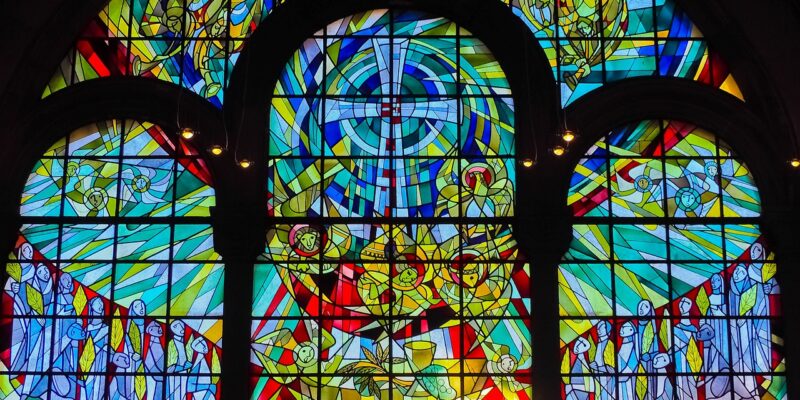
There is a difference between loving a country and asking Christianity to rule it. We need to recognize it because the cross can be carried into public life as a sign of self-giving love, or raised over public life as a claim to power.
That is a present concern. A 2026 Pew Research Center survey found that 17% of U.S. adults favor declaring Christianity the nation’s official religion, up from 13% in 2024. At the same time, 79% say churches and other houses of worship should not endorse political candidates.1Rotolo, C., & Smith, G. A. (2026, May 14). How Americans feel about religion’s influence in government and public life. Pew Research Center. https://www.pewresearch.org/religion/2026/05/14/how-americans-feel-about-religions-influence-in-government-and-public-life/ These findings measure different dimensions of religious influence. Together they show that Americans draw complicated and sometimes inconsistent boundaries between faith, political influence, and governmental power. Christians therefore need to distinguish faithful public witness from the pursuit of Christian control.
I want to be clear about my own conviction: the gospel has public consequences. Following Jesus should shape how we treat migrants, queer and transgender people, racial minorities, people in poverty, religious minorities, disabled people, prisoners, and every neighbor whose dignity is treated as negotiable. The church should never be silent when people are harmed. Christian witness and Christian control follow very different paths.
Christian faith and the temptation of nationalism
Christian nationalism fuses Christian identity with national identity and treats political dominance as a way to defend or restore the faith. It tells a story in which “real” citizens belong to a preferred religious and cultural group, while others are tolerated only on unequal terms. The results can be measured. Among respondents PRRI classifies as Christian nationalism Adherents, 79% score high or very high on its Right-Wing Authoritarianism Scale. Sixty-seven percent of Adherents and 53% of Sympathizers agree with the claim that immigrants are invading the country and replacing its cultural and ethnic background.2Public Religion Research Institute. (2026, February 17). Mapping Christian nationalism across the 50 states: Insights from PRRI’s 2025 American Values Atlas. https://prri.org/research/mapping-christian-nationalism-across-the-50-states-insights-from-prris-2025-american-values-atlas/
Christian nationalism is a form of idolatry because it places the nation beside God as an object of sacred loyalty. It borrows Christian symbols, language, and authority to bless national power. The nation then becomes a sacred cause whose policies, leaders, and myths resist Christian judgment. Scripture gives no nation that privilege. The Episcopal Church’s House of Bishops Theology Committee identifies Christian nationalism as sin because it distorts our relationships with God, one another, and creation. The committee also warns against political stories that divinize a particular community, treat its power as absolute, and marginalize others.3House of Bishops Theology Committee. (2023, March). Christian nationalism: An interim report to the House of Bishops. https://static1.squarespace.com/static/5ade38cf7e3c3a8e0fd03b28/t/640f198c15884a1f72578e3a/1678711181823/2023-03%2BHoB%2BTheology%2BCommittee%2Binterim%2Breport-final.pdf
Faith should inspire public service. Christians have every right, and often a responsibility, to advocate, vote, organize, protest, serve, and speak. The central question concerns the kind of power our faith teaches us to seek.
Jesus refuses the politics of domination
When Jesus’ disciples reached for status, he pointed to the rulers who “lord it over” others and said, “But it is not so among you.” Greatness in his community would be measured by service, not domination (Mark 10:42–45, NRSVue). Before Pilate, Jesus said, “My kingdom does not belong to this world” (John 18:36, NRSVue). He was explaining the difference between God’s reign and the violent machinery by which empires preserve themselves.4National Council of Churches. (2021). New Revised Standard Version Updated Edition (Mark 10:42–45; John 18:36). Friendship Press. https://www.friendshippress.org/pages/about-the-nrsvue
The cross makes that difference impossible to ignore. Jesus endures the violence of empire without returning it, and the resurrection exposes the limits of imperial power. He forgives enemies, restores people whom religious and social systems cast out, and gives himself in love. Any political theology that needs fear, exclusion, humiliation, or coercion to succeed may use Christian words, yet it moves in the opposite direction from Jesus.
Open and Relational Theology gives us language for this conviction. God’s power is best understood through relational love rather than unilateral control. Divine love works through invitation, healing, empowerment, and new possibilities without erasing creaturely freedom.5Oord, T. J. (2015). The uncontrolling love of God: An open and relational account of providence. IVP Academic. https://ivpress.com/the-uncontrolling-love-of-god A church that proclaims God’s noncoercive love cannot credibly demand coercive privilege for itself.
Our baptism gives us a different public identity
Episcopalians already have a public theology in the Baptismal Covenant. We promise to seek and serve Christ in all persons, love our neighbors, strive for justice and peace, and “respect the dignity of every human being.”6The Episcopal Church. (1979). The Book of Common Prayer (p. 305). Church Publishing. https://www.episcopalchurch.org/wp-content/uploads/2020/12/book_of_common_prayer-pages-297-314.pdf
Every human being means the Christian and the Muslim, the believer and the atheist, the citizen and the undocumented neighbor, the conservative and the progressive, the gay teenager and the transgender adult, the person we understand and the person we do not. Baptism does not authorize us to rank their dignity. It binds us to recognize it.
In 2024, the General Convention of The Episcopal Church formally acknowledged religious nationalism as an urgent and deeply rooted problem, lamented its harm to marginalized communities, and urged Episcopalians to educate themselves and oppose associated violence and intimidation.7General Convention of The Episcopal Church. (2024). Resolution 2024-A081: Combat rising religious nationalism. The Archives of The Episcopal Church. https://digitalarchives.episcopalarchives.org/cgi-bin/acts/acts_resolution.pl?resolution=2024-A081 The resolution calls the church to practice public faith without turning Christianity into an instrument of domination.
Prophetic witness resists partisan possession
The church’s answer to Christian nationalism must include truthful public witness. Silence can bless injustice just as surely as religious propaganda can. The church must be able to say that dehumanizing immigrants is not Christ-like; treating LGBTQ people as threats is not Christ-like; suppressing truthful accounts of racism is not Christ-like; using Scripture to sanctify cruelty, revenge, or unquestionable political authority is not Christ-like.
Those judgments should not depend on which party holds office. Our allegiance to Jesus requires us to tell the truth about every leader, every movement, and ourselves. Prophetic witness names conduct and consequences in the light of the gospel. It refuses to declare a candidate God’s chosen instrument, excuse cruelty because it advances a preferred agenda, or confuse electoral victory with divine approval.
A love of country that can tell the truth
Christians can love their country. Mature love tells the truth. It can give thanks for what is beautiful, confess what is sinful, repair what has been broken, and make room for neighbors whose beliefs differ from our own. Religious freedom is not a consolation prize we grant to others after securing power for ourselves. It is part of the dignity we defend for everyone.
Questions for Christian discernment
Christian nationalism often arrives wrapped in familiar religious language. These questions can help us examine a political claim, movement, or message before giving it our support:
- Does this claim give the United States a unique covenant with God or a special divine status?
- Does it connect Christian identity with citizenship, race, culture, or political party?
- Does it call Christians toward service and the common good, or toward dominance and privilege?
- Whose dignity, equality, or religious freedom would be diminished?
These questions require honesty about movements we oppose and movements we support. Christian discernment begins by placing every political loyalty beneath our commitment to follow Jesus.
A companion article, “No Nation at the Altar: Christian Nationalism and the Worship of God,” examines how national flags, patriotic hymns, and civil religion can reshape Christian worship.
The cross is not a flag, and the gospel is not a campaign platform. The church loses its soul when it trades the self-giving power of love for proximity to coercive power. Our calling is harder and more hopeful: to serve without controlling, to speak truth without dehumanizing, to seek justice without making an idol of the nation, and to trust that the Holy Spirit can work through freedom rather than force.
In a season when Christianity is being recruited for competing political projects, perhaps our most faithful public declaration is also our baptismal answer: We will, with God’s help.
References
- 1Rotolo, C., & Smith, G. A. (2026, May 14). How Americans feel about religion’s influence in government and public life. Pew Research Center. https://www.pewresearch.org/religion/2026/05/14/how-americans-feel-about-religions-influence-in-government-and-public-life/ ↩︎
- 2Public Religion Research Institute. (2026, February 17). Mapping Christian nationalism across the 50 states: Insights from PRRI’s 2025 American Values Atlas. https://prri.org/research/mapping-christian-nationalism-across-the-50-states-insights-from-prris-2025-american-values-atlas/ ↩︎
- 3House of Bishops Theology Committee. (2023, March). Christian nationalism: An interim report to the House of Bishops. https://static1.squarespace.com/static/5ade38cf7e3c3a8e0fd03b28/t/640f198c15884a1f72578e3a/1678711181823/2023-03%2BHoB%2BTheology%2BCommittee%2Binterim%2Breport-final.pdf ↩︎
- 4National Council of Churches. (2021). New Revised Standard Version Updated Edition (Mark 10:42–45; John 18:36). Friendship Press. https://www.friendshippress.org/pages/about-the-nrsvue ↩︎
- 5Oord, T. J. (2015). The uncontrolling love of God: An open and relational account of providence. IVP Academic. https://ivpress.com/the-uncontrolling-love-of-god ↩︎
- 6The Episcopal Church. (1979). The Book of Common Prayer (p. 305). Church Publishing. https://www.episcopalchurch.org/wp-content/uploads/2020/12/book_of_common_prayer-pages-297-314.pdf ↩︎
- 7General Convention of The Episcopal Church. (2024). Resolution 2024-A081: Combat rising religious nationalism. The Archives of The Episcopal Church. https://digitalarchives.episcopalarchives.org/cgi-bin/acts/acts_resolution.pl?resolution=2024-A081 ↩︎